
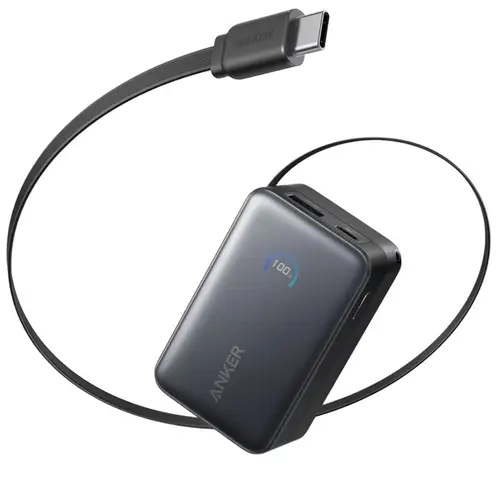
Traveling has become increasingly dependent on smartphones, tablets, wireless earbuds, smartwatches, cameras, and other portable electronics. These devices make trips more convenient by providing navigation, communication, entertainment, mobile payments, and access to important travel information. However, all of these benefits depend on one essential resource: battery power. When a device runs low while you are away from a wall outlet, having a dependable portable charger can make a significant difference. This is where a power bank with built in USB C cable becomes a practical travel essential.
Why Battery Power Matters While Traveling
A smartphone can be particularly important during a journey. Travelers may use it to access boarding passes, check maps, translate languages, contact hotels, make reservations, or communicate with family and friends. Losing battery power at the wrong moment can therefore create unnecessary stress.
Traditional power banks can solve this problem, but they often require a separate charging cable. That extra cable can easily be forgotten, misplaced, or tangled inside a backpack. A power bank that includes an integrated USB-C cable removes one of these common inconveniences.
Instead of searching through a bag for the correct cable, travelers can simply take out the power bank, connect the built-in cable to a compatible device, and begin charging.
The Convenience of a Built-In USB-C Cable
The biggest advantage of a power bank with built in USB C cable is convenience. A built-in cable is always attached to the charger, so there is no need to carry an additional charging lead for everyday use.
This design can be especially useful when traveling with limited luggage. People who prefer lightweight backpacks, compact carry-on bags, or minimalist travel setups can reduce the number of separate accessories they need to pack.
An integrated cable can also make charging easier in crowded environments. At an airport, train station, café, or hotel lobby, travelers can connect their phone quickly without unpacking a collection of cables.
Choosing the Right Capacity
Power-bank capacity is usually measured in milliamp-hours, commonly abbreviated as mAh. The right capacity depends on the traveler’s devices and how frequently they expect to access power outlets.
A smaller power bank may be sufficient for occasional top-ups during short trips. Larger-capacity models can provide more charging opportunities and may be better suited to long journeys, road trips, camping, or situations where electrical outlets are limited.
However, capacity is not the only factor to consider. A larger battery generally adds weight and physical size. Travelers should therefore balance charging capacity with portability.
For everyday travel, a compact model that can comfortably fit inside a pocket or small bag may be more useful than a very large power bank that becomes inconvenient to carry.
USB-C Compatibility and Charging Performance
USB-C has become widely adopted across modern consumer electronics. Many smartphones, tablets, headphones, gaming accessories, and other devices use USB-C connections.
Before buying a power bank with built in USB C cable, travelers should check whether the integrated cable is compatible with their primary devices. Compatibility is especially important if a traveler carries multiple electronics that use different connector types.
Charging speed is another consideration. Different power banks support different output levels, so buyers should check the manufacturer’s specifications. A charger with suitable power output can provide faster and more efficient charging for compatible devices.
It is also worth checking whether the power bank supports features such as USB Power Delivery (USB PD), if fast charging is important. Compatibility between the charger and the device determines how effectively fast-charging capabilities can be used.
Portability Makes a Difference
Travel accessories should be convenient rather than burdensome. A power bank that is too heavy or bulky may remain in a suitcase instead of being carried throughout the day.
Compact dimensions can make a significant difference when exploring a city, attending conferences, hiking, or moving between airports. A slim design can fit into a backpack pocket, purse, or travel organizer without taking up too much space.
The built-in cable contributes to portability because it eliminates the need for one separate accessory. This creates a cleaner and more organized travel setup.
Useful for Airports and Long Journeys
Airports are one of the places where portable charging can be particularly valuable. Travelers may spend several hours waiting for flights, moving between terminals, or dealing with delays. Available charging outlets may also be occupied.
Having a portable battery provides greater flexibility. Instead of remaining beside an electrical outlet, travelers can continue using their devices while charging.
The same advantage applies to long-distance buses, trains, road trips, and flights where access to power may be limited or inconvenient.
A Smart Option for Everyday Carry
A power bank with built in USB C cable is not limited to vacations. It can also become part of an everyday carry setup.
Students can use one when attending classes for long hours. Professionals can keep one available during meetings, conferences, and business travel. Commuters can carry one for unexpected battery emergencies.
Because the cable is integrated, there is less equipment to remember each morning. This makes the charger particularly convenient for people who frequently move between locations.
Safety Features to Look For
Safety should be an important consideration when purchasing any rechargeable battery accessory. A quality power bank should include appropriate protective technologies designed to reduce risks associated with charging.
Depending on the model, safety features may include overcharge protection, over-current protection, over-voltage protection, short-circuit protection, and temperature monitoring.
Buyers should purchase products from reputable manufacturers and carefully follow the manufacturer’s charging, storage, and transportation instructions. Travelers should also check airline rules before carrying larger-capacity lithium-ion power banks on flights, as aviation regulations can place restrictions on spare batteries.
Build Quality and Durability
Travel equipment often experiences more handling than accessories used at home. A power bank may be placed in backpacks, luggage, pockets, or travel organizers throughout a journey.
For this reason, construction quality matters. A sturdy exterior, reliable cable connection, and well-designed buttons or ports can contribute to long-term usability.
The integrated cable should also be designed to withstand normal bending and repeated use. Since it is permanently attached, cable durability is especially important.
Keeping Your Devices Ready
The real value of a power bank with built in USB C cable comes from reducing small travel inconveniences. Instead of worrying about whether a charging cable is packed, travelers can keep one integrated charging solution ready.
For people who rely heavily on smartphones and other USB-C devices, this can provide peace of mind. A compact power bank can help maintain access to navigation, communication, entertainment, digital tickets, and other essential functions throughout the day.
Conclusion
A power bank with built in USB C cable combines portable battery capacity with the convenience of an integrated charging connection. For travelers, this means fewer accessories to pack, less cable clutter, and faster access to backup power when an outlet is unavailable.
When choosing one, consider battery capacity, charging speed, USB-C compatibility, size, weight, safety features, and overall build quality. The ideal model should provide enough power for your devices without becoming an unnecessary burden in your luggage.
For frequent travelers and everyday commuters alike, a compact integrated-cable power bank can be a simple but highly useful addition to a modern travel kit.