
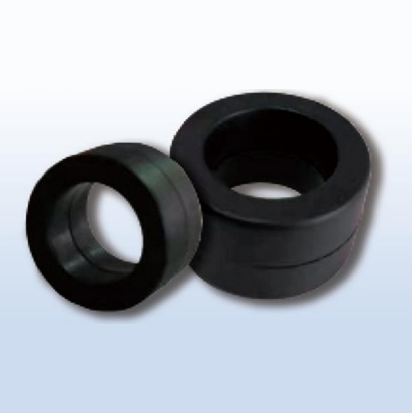
In the rapidly evolving field of electronics, power efficiency, precision, and reliability are more crucial than ever. One of the most significant developments driving this innovation is the OEM air gap amorphous core for power inductors. These specialized components are transforming how engineers and designers approach custom electronics projects, offering unmatched performance in demanding applications. Among these, the high-precision air gap amorphous core for inductors stands out as a benchmark for quality and functionality.
Understanding Air Gap Amorphous Cores
Air gap amorphous cores are a class of magnetic materials used in inductors and transformers. Unlike traditional ferrite or silicon steel cores, amorphous cores are made from a unique metallic glass that has no long-range crystalline structure. This gives them several advantages, including lower core losses, higher permeability, and excellent thermal stability.
The “air gap” in these cores refers to a small, precisely engineered gap in the magnetic path of the core. This gap plays a crucial role in controlling the inductor’s characteristics, such as inductance, saturation current, and linearity. By adjusting the air gap, manufacturers can tailor the core’s performance to meet the exact requirements of a specific application.
Why OEM Air Gap Amorphous Cores Are Essential for Custom Designs
Custom electronics often require components that meet very specific electrical and mechanical criteria. Standard inductors may not always provide the desired balance of efficiency, size, and performance. This is where OEM solutions shine.
- Tailored Specifications: OEM air gap amorphous cores allow designers to specify parameters like inductance, saturation current, and size. This flexibility ensures that the inductor performs optimally in its intended circuit.
- Enhanced Efficiency: Amorphous cores have inherently low core losses, which translates to reduced heat generation and improved energy efficiency. For power electronics, this efficiency can mean longer device lifespans and lower operating costs.
- Compact Form Factor: Many modern electronics, from portable devices to industrial equipment, require components that deliver high performance without occupying excessive space. The combination of amorphous material and precise air gap engineering allows for smaller, lighter inductors that do not compromise on capability.
- Consistency and Reliability: Using high-precision air gap amorphous core for inductors ensures that each unit meets exact specifications. This level of consistency is critical in applications where even minor deviations could lead to performance issues or system failures.
Applications Across Industries
The adoption of OEM air gap amorphous cores is not limited to one sector; they are increasingly found in a wide range of applications:
- Power Supplies: High-frequency switching power supplies benefit from the low-loss characteristics of amorphous cores, resulting in higher efficiency and reduced thermal stress.
- Electric Vehicles: EVs require inductors capable of handling high currents while maintaining efficiency. Customized amorphous cores help designers meet these stringent demands.
- Renewable Energy: Solar inverters and wind turbine converters rely on efficient power conversion. OEM cores allow for optimized inductors that maximize energy transfer while minimizing losses.
- Consumer Electronics: From laptops to high-end audio equipment, the precise control offered by these cores ensures performance consistency and device reliability.
The Role of High-Precision Air Gap Amorphous Cores
Among the various options available, the high-precision air gap amorphous core for inductors is particularly noteworthy. These cores are engineered with tight tolerances, ensuring that the inductance and magnetic characteristics are exactly as specified.
This precision is vital in several ways:
- Stable Inductance: In high-speed or sensitive circuits, even minor variations in inductance can lead to performance degradation. High-precision cores maintain stability under varying temperatures and operating conditions.
- Controlled Saturation: Air gaps help prevent premature core saturation, which can distort signals or reduce efficiency. Precision gaps allow designers to fine-tune the saturation current to match the needs of the application.
- Noise Reduction: Precise cores minimize electromagnetic interference (EMI), a critical factor in maintaining signal integrity in high-frequency circuits.
Benefits of Partnering with OEM Manufacturers
Choosing an OEM provider for air gap amorphous cores offers advantages beyond the component itself:
- Expert Design Support: OEM manufacturers often work closely with engineers, providing guidance on material selection, gap sizing, and thermal management to optimize performance.
- Rapid Prototyping: Custom cores can be designed and produced quickly, enabling faster iteration and shorter development cycles for new electronics projects.
- Quality Assurance: Reputable OEMs adhere to strict quality control processes, ensuring that each core meets rigorous standards and reduces the risk of field failures.
Future Trends in Inductor Design
The growing demand for energy-efficient and compact electronics is driving continued innovation in core materials and designs. Emerging trends include:
- Integration of Nanocrystalline Materials: Combining amorphous cores with nanocrystalline layers can further reduce losses and improve saturation characteristics.
- Miniaturization: Advances in core shaping and precision manufacturing allow for smaller inductors without sacrificing performance, crucial for wearable technology and IoT devices.
- Smart Manufacturing: Automated quality checks and AI-driven design optimization are becoming standard in OEM core production, ensuring consistency and cutting-edge performance.
Conclusion
OEM air gap amorphous cores, particularly the high-precision air gap amorphous core for inductors, represent a significant leap forward in custom electronics design. By offering unmatched efficiency, precise performance, and adaptability to specific applications, these cores empower engineers to create smaller, more reliable, and more energy-efficient devices.
As electronics continue to advance, the role of customized, high-precision components like these will only grow. Manufacturers and designers who embrace OEM air gap amorphous cores are positioning themselves at the forefront of innovation, ready to meet the demands of an increasingly complex and efficiency-driven market.
Whether in power electronics, consumer devices, or renewable energy systems, the combination of amorphous materials, precise air gaps, and OEM customization is redefining what is possible in modern inductor design.